How to set New Year goals you can actually achieve (as we head into 2026)
As we approach 2026, it's natural to pause and think about where the time went, what worked, and what you'd like to change moving forward. Meaningful progress doesn't come from vague resolutions or overly ambitious plans, but from clarity, intention, and systems that support your day-to-day reality.
Before diving into new goals, we strongly recommend starting with reflection. Looking back on the past year helps you identify patterns, energy leaks, and moments of progress you might otherwise overlook. Reflection creates context, and without context, goals are just wishes written down.
As the calendar flips toward a new year, many people abandon the idea of New Year's resolutions altogether. And honestly, it's understandable. Year after year, we see the same pattern: motivation spikes in January, fades by February, and by March most goals are quietly forgotten. This doesn't mean you're bad at goal setting. It means the way goals are traditionally set doesn't match how real life actually works.
After a short break, a bit of rest, and probably more food than usual, we tend to come back into January feeling optimistic and ambitious. We want everything to be different at once. Health, finances, relationships, career, mindset. The result is often a long, overwhelming list that looks impressive but lacks structure or intention.
There's nothing wrong with dreaming big. In fact, ambition is a good thing. The problem isn't the goals themselves, but the way they're framed and combined. Too many goals compete for the same limited resources: time, energy, focus, and attention. Several goals overlap or point to the same underlying desire, while others actively conflict with each other.
When you look at a list like this, it's worth asking: what is the real intention behind it? Is it better health? More freedom? A sense of accomplishment? Financial security? Without understanding the why, it's almost impossible to stay committed when motivation dips.
This is where most goal-setting efforts fall apart. Not because people don't care, but because they don't slow down enough to define what actually matters to them.
Preparation: the missing piece
Another common reason goals fail is lack of preparation. Goal setting isn't just about deciding what you want. It requires thought, self-awareness, and an honest assessment of your current situation.
Without preparation, goals tend to be vague, unrealistic, or disconnected from your daily life. With preparation, they become clearer, more grounded, and much easier to turn into action.
Set aside some uninterrupted time for this process. An hour is often enough to create a solid foundation if you approach it intentionally. All you need is a quiet space, a way to write things down, and the willingness to be honest with yourself.
Defining meaningful goals for the year ahead
Rather than setting dozens of resolutions, we recommend focusing on a small number of meaningful goals across key areas of your life. A helpful framework is to choose up to six areas, such as:
Personal growth
Professional or career development
Physical health
Financial wellbeing
Relationships, and
Mental or emotional wellbeing.
You can adjust these categories to suit your life, but keep in mind that six goals is already a lot. Fewer, well-defined goals will almost always outperform a long, scattered list.
For each goal, take the time to answer three essential questions:
What is the purpose of this goal? Why is it important to you right now? And what does success actually look like in practical, observable terms?
These questions force clarity. They help you move from vague intentions like “get healthier” to something concrete and measurable. For example, success might look like having more energy during the workday, sleeping better, or feeling confident in your body again.
Start small, think long-term
As we move into 2026, one principle matters more than ever: consistency beats intensity.
You don't need to become a completely new version of yourself overnight. A slightly better version of you, sustained over time, creates far more meaningful change. Small, repeatable actions compound, and over weeks and months they quietly add up to results that feel dramatic in hindsight. Perfection isn't required, but direction is.
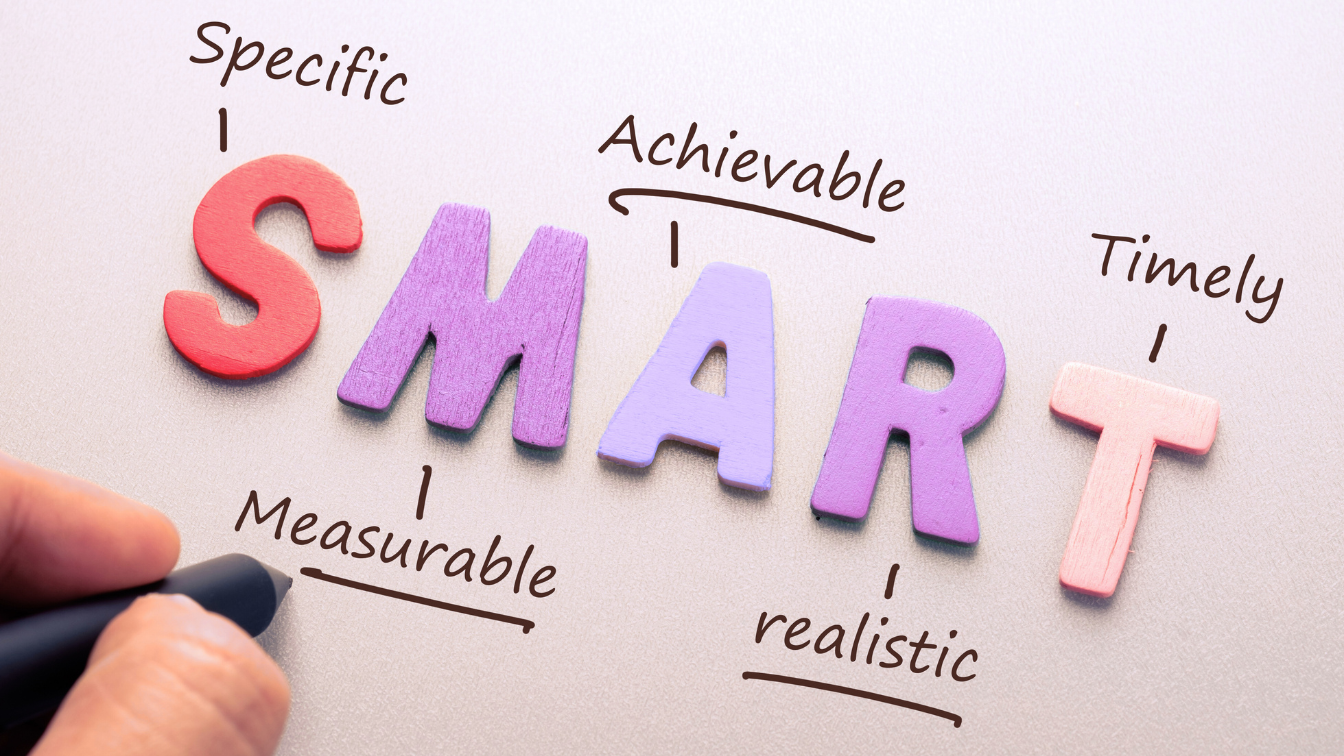
This is where the idea of SMART goals becomes especially useful. Not as a rigid framework, but as a reality check. Goals that work tend to be clear and grounded rather than aspirational and vague.
Instead of setting a goal to “cook like a professional,” you might aim to add five new healthy recipes to your weekly rotation by the end of March. Instead of aiming for a promotion immediately, you could commit to 30–40 minutes of focused, job‑related learning most workdays. These goals are smaller, but they are far more likely to stick because you know exactly what action is required.
In practice, SMART goals simply mean that your goal is specific enough that you know what to do next, measurable enough that you can tell whether you're making progress, achievable within your current lifestyle, relevant to the bigger picture of what you want your life to look like, and anchored to a realistic timeframe.
SMART goals are clear, actionable objectives that are Specific, Measurable, Realistic, Relevant, and Timely.
When goals meet these criteria, they stop feeling abstract and start feeling actionable. They naturally translate into tasks you can add to a task list, schedule into your week, and revisit regularly. Over time, this turns goal setting from a once‑a‑year exercise into an ongoing process of steady, intentional progress.
Do your goals fit your life right now?
One of the most overlooked aspects of goal setting is alignment with your current reality. Not the ideal future version of you, but the version of you that exists today.
If you're exhausted, overwhelmed, and short on time, setting a goal that requires massive daily effort is likely to backfire. That doesn't mean you lower your standards; it means you build a smarter path.
Ask yourself whether your goals complement each other or compete for the same limited energy. Consider whether they align with where you realistically see your life going this year, and how many new habits you are trying to build at once.
Often, several goals can be supported by one foundational habit. Improving sleep, for example, can positively affect focus, health, mood, and productivity.
Choosing a simple theme or mantra for the year can also help. Something like “my year of balance” or “my year of momentum” creates a mental anchor when decision-making gets hard.
Turning goals into action with systems and tasks
Once your goals are defined, the next step is turning them into something you can actually work with day to day. Big goals feel overwhelming because they live at a high level. They sound inspiring, but they don't tell you what to do on a Tuesday afternoon. This is where systems come in. Systems remove friction by translating intention into action.
Start by identifying major milestones. If your goal is to run regularly, the milestone isn't “run 5km every day.” It's building up gradually over weeks or months, allowing your body and routine to adapt. Milestones give your goal shape, but tasks are what move it forward.
This is where Time Stream becomes especially useful. Instead of keeping goals and plans scattered across notes, reminders, or your head, you can break each milestone down into clear, actionable tasks and add them directly to your task list. These are the small steps you can realistically complete, even on busy days.
For example, you might create a dedicated collection for your New Year's resolutions. This gives you one place to house everything related to your goals for the year ahead, without cluttering your everyday workflow. From there, you can pull relevant tasks into your daily list based on what you want to focus on that day or week. This makes your goals part of your real schedule, not just something you think about occasionally.
Tasks might include practical steps like buying the right equipment, blocking time in your calendar, scheduling recurring focus sessions, or preparing your environment to reduce friction. When these tasks live in your system, they stop feeling optional and start feeling doable.
You can also use tags to stay organised and intentional. Creating a tag such as “New Year resolution” allows you to quickly track all tasks connected to your goals, see what's in progress, and review how consistently you're showing up. Over time, this visibility helps you spot patterns, celebrate progress, and adjust when needed.
By breaking goals into tasks and regularly adding them to your daily list, you move from motivation-driven planning to system-supported execution. Progress becomes visible, manageable, and repeatable, which is exactly what keeps momentum going long after the excitement of a new year fades.
Plan for obstacles before they happen
No year goes exactly as planned. Work gets busy, routines break, energy fluctuates. Planning for setbacks doesn't mean expecting failure; it means building resilience.
Think through potential obstacles in advance. What might realistically get in the way? Travel, illness, workload, loss of motivation. For each scenario, decide how you'll respond.
When you already have a plan, setbacks feel less like failure and more like detours.
Accountability and momentum
Accountability doesn't have to be public or dramatic. It simply needs to matter to you.
Accountability might come from:
Tracking progress visually
Sharing your goals with someone you trust
Creating small rewards for hitting milestones
Setting gentle consequences for ignoring commitments
Motivation naturally ebbs and flows, so it helps to intentionally refill it. Music, routines, mentors, community, and reflection all play a role in staying engaged over the long term.
Your year, your pace
As you head into 2026, remember that progress isn't about doing more, faster. It's about doing the right things, consistently, in a way that fits your life.
Clear goals, realistic expectations, supportive systems, and thoughtful task planning give you the best chance of following through. Keep your plan visible, revisit it often, and allow it to evolve as you do.
This isn't about having a perfect year. It's about creating momentum you can sustain well beyond January.
In today’s fast-paced world, productivity is more important than ever. Yet, staying productive isn’t always easy. With the correct tools, staying on track becomes easier. Read on to find out how Time Stream will help you overcome five productivity challenges.
In our fast-paced world, multitasking feels essential—replying to emails in meetings or switching between tasks seems efficient. But research shows it hampers focus, lowers work quality, and invites mistakes. Let’s explore why multitasking fails and how single-tasking can boost productivity.
Being productive is a goal many of us chase. But sometimes, the advice we follow is actually doing more harm than good. From hustle culture to multitasking, it’s easy to fall for myths that feel productive but lead to burnout and distraction. In this blog, we’re busting seven productivity misconceptions and showing you what to do instead.
|
6 min
Find your flow. Start using Time Stream today.
The only productivity app that protects your time and privacy. Focus better, accomplish more.