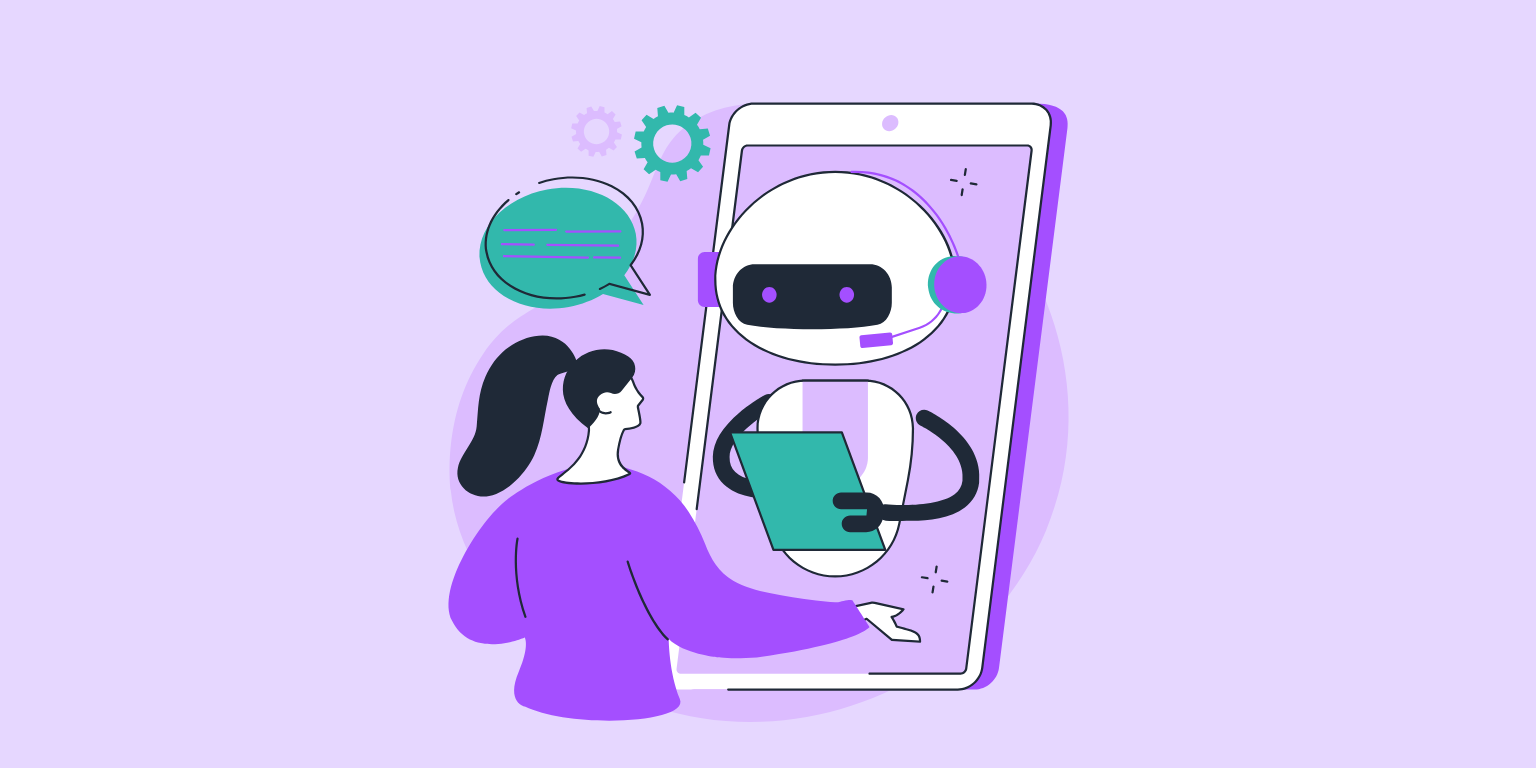
How AI is transforming the way we work and its impact on productivity
Artificial intelligence has moved from being a futuristic concept to an everyday companion. It's no longer limited to complex software or specialised industries—it now quietly supports the work people do across countless fields, often in ways they don't even consciously register. Whether it's helping clarify ideas, summarise information, or outline the first steps of a project, AI is influencing how quickly and confidently people move through their tasks.
Today, most of us blend our own judgement with guidance and support from AI. AI acts as a powerful accelerator—reducing friction, speeding up execution, and helping people move through tasks more efficiently. From automating routine tasks to providing insights that guide decision-making, AI is reshaping productivity in ways that were unimaginable just a decade ago.
In this blog, we'll explore how AI is influencing work, the ways it can boost productivity, and the challenges and trade-offs that can come with relying on these intelligent tools.
AI as a productivity partner
When it comes to productivity, the biggest challenge for most professionals isn't a lack of skill—it's time. Many tasks that consume hours of the workday are repetitive, predictable, or administrative. AI tools excel at these tasks, acting as a productivity partner that handles the “busywork” so humans can focus on higher-value activities.
For instance, AI-powered scheduling assistants can automatically find meeting times that fit everyone's calendar, saving hours spent on back-and-forth emails. Document management AI can scan, categorize, and summarize reports, allowing employees to digest information quickly. Even coding and software testing are being streamlined with AI tools that detect errors and suggest solutions faster than a human could manually.
By taking over repetitive tasks, AI frees up mental bandwidth, letting employees concentrate on creative problem-solving, strategy, and innovation—the aspects of work where humans truly excel.
Smarter decision-making through AI insights
One of the most powerful ways AI enhances productivity is through data-driven decision-making. In today's world, we are inundated with information—emails, analytics dashboards, reports, market trends—but not all of it is relevant. AI can process vast amounts of data and identify meaningful patterns, helping people make decisions faster and more accurately.
Consider marketing teams, for example. AI tools can analyze customer behavior across multiple channels and predict which campaigns are likely to perform best. In finance, AI algorithms can sift through millions of data points to detect anomalies, trends, or risks in real time. Even in healthcare, AI-powered systems help doctors analyze medical imaging or patient data to make faster and more accurate diagnoses.
This doesn't mean AI replaces human decision-making; rather, it acts as a support, accelerating and enhancing the decisions we make. It provides insights and suggestions, while humans bring context, empathy, and judgment. Together, they create a synergy that could lead to better outcomes, faster execution, and increased productivity.
Streamlining communication and collaboration
Modern work often revolves around collaboration. Teams juggle multiple projects, chat platforms, emails, and shared documents, which can quickly become overwhelming. AI is making communication smoother and more efficient, reducing the cognitive load of managing these interactions.
AI-powered email assistants can prioritize messages, draft responses, and even flag urgent communications. Virtual meeting tools can automatically generate transcripts, highlight key points, and assign action items, ensuring nothing falls through the cracks. Collaborative platforms now incorporate AI to suggest task assignments, track progress, and forecast project completion timelines.
By handling the administrative side of collaboration, AI lets teams focus on meaningful interactions—brainstorming, problem-solving, and innovating together—rather than spending hours on logistics.
Enhancing creativity and innovation
It's easy to think of AI as purely analytical, but it's also a tool that can boost creativity. Writers, designers, and content creators are increasingly using AI to generate ideas, create drafts, and explore alternative approaches.
For example, AI can suggest multiple ways to phrase an email or social media post, generate design mockups, or even compose initial drafts of articles. Instead of starting from a blank page, creatives now have a partner that accelerates ideation and allows them to focus on refinement and originality.
Musicians, filmmakers, and game developers are also leveraging AI to experiment with new styles, generate assets, and test concepts. In this way, AI doesn't replace creativity—it amplifies it, enabling people to produce more, iterate faster, and take risks they might otherwise avoid.
Real-world examples of AI in action
To illustrate how AI is boosting productivity across industries, consider these examples:
Healthcare: AI assists doctors in diagnosing illnesses from imaging scans, reducing diagnostic time and improving accuracy. Radiologists can focus on patient care rather than manually reviewing hundreds of images.
Finance:Hedge funds and investment firms use AI to monitor market conditions and detect risks instantly, speeding up decisions and reducing costly errors.
Marketing: AI analyzes user behavior to personalize campaigns, recommend content, and predict customer engagement, leading to higher ROI with less manual effort.
Human Resources: AI-powered recruitment tools screen resumes, rank candidates based on suitability, and even schedule interviews, freeing HR teams to engage with top candidates more effectively.
Creative industries: Writers, designers, and artists use AI for brainstorming, generating drafts, and refining ideas, allowing them to focus on producing unique, high-quality work.
These examples highlight a key theme: AI excels at supporting human work. By removing mundane or time-consuming tasks, AI allows people to spend their energy where it matters most.
The human-AI collaboration
It's easy to assume that AI will either replace humans entirely or act as a flawless productivity booster. The reality is less clear-cut. In many cases, AI can accelerate work by handling repetitive or data-heavy tasks, but it also comes with limitations, biases, and a need for constant human oversight. AI might highlight insights, suggest solutions, or organize information, but interpreting those outputs still requires human judgment, creativity, and context.
This collaboration can push people to focus on higher-level thinking or creative work—but it also risks deskilling some roles, over-reliance on algorithms, and shifting accountability. As AI handles more routine work, humans must remain critical users, ensuring that outputs are accurate, ethical, and aligned with organizational goals.
Looking ahead
The future of AI in the workplace is both exciting and uncertain. AI tools will likely become more integrated, personalized, and capable of predicting needs or suggesting solutions—but that doesn't guarantee seamless adoption or universal benefits. Misuse, over-reliance, and ethical dilemmas are real concerns, and not every task or industry will experience productivity gains.
Rather than seeing AI as inherently positive or negative, it's more productive to treat it as a tool with trade-offs. Used thoughtfully, AI can reduce friction, handle repetitive work, and free humans to focus on strategy, problem-solving, and creativity—but only if humans remain actively engaged, questioning outputs, and making final decisions.
In the coming years, AI will reshape workplaces in unpredictable ways. For some, it may enhance productivity and creativity; for others, it may introduce new challenges and responsibilities. The key is not to blindly embrace or fear AI, but to critically consider how it integrates with human work, and where its use adds value versus where it may create dependency or unintended consequences.
More from the blog
Find your flow, take your productivity to the next level.
Productivity apps have become integral to our daily life but with rising concerns over data breaches, users demand tools that prioritize data security. Privacy-focused productivity apps offer a vital solution, meeting the need for efficiency and peace of mind.
Sustainability’s growing urgency is reshaping how we work, making green productivity—efficient work with less environmental impact—essential. This blog looks at how the productivity industry is adapting and why it matters.
Productivity apps are everywhere helping us map out our days, streamline projects, and stay on top of our to-do lists. But there is a catch: as digital tools become more powerful, they often know far too much about us.
|
6 min
Find your flow. Start using Time Stream today.
The only productivity app that protects your time and privacy. Focus better, accomplish more.